

Keeping a home comfortable, safe, and well organized does not always require expensive renovations or professional help. Many household problems can be reduced through simple maintenance habits, regular inspections, and a few practical improvements. These DrHomey handy tips focus on everyday tasks that can help homeowners save time, avoid preventable repairs, improve efficiency, and maintain a healthier living environment.
Create Simple Organization and Cleaning Routines
A well-organized home is easier to maintain. Instead of trying to clean everything at once, divide the house into smaller areas and create simple routines.
Start with frequently used spaces such as the kitchen, bathroom, entryway, and living room. Spend a few minutes each day returning items to their proper places, wiping frequently touched surfaces, and keeping walkways clear.
Storage also matters. Drawer dividers, labeled containers, baskets, and vertical shelving can make small spaces easier to manage. In the kitchen, keep frequently used items close to where they are needed. This reduces unnecessary movement and makes daily tasks more efficient.
Decluttering can also prevent unnecessary purchases. Before buying another household item, check whether you already have something similar stored elsewhere.
Keep a Basic Home Maintenance Toolkit
You do not need a professional workshop to handle minor household tasks. A basic toolkit can cover many everyday jobs.
Useful items include:
- Multi-bit screwdriver
- Adjustable wrench
- Pliers
- Utility knife
- Tape measure
- Level
- Flashlight
- Basic voltage tester
- Hammer
- Screw and wall-anchor assortment
Keep these tools together in an easily accessible location. However, electrical work involving exposed wiring, major plumbing problems, gas appliances, structural repairs, or other potentially dangerous tasks should be handled by a qualified professional.
The goal is not to repair everything yourself. It is to identify small problems early and know when professional assistance is appropriate.
Deal With Small Problems Before They Become Expensive
A small household problem can become much more expensive when ignored. A dripping faucet, for example, may indicate a worn washer, O-ring, cartridge, or another component. A small water leak under a sink can eventually damage cabinets and flooring.
Look regularly for:
- Water stains on ceilings or walls
- Damp areas under sinks
- Dripping faucets or pipes
- Cracked caulking around tubs and showers
- Slow drainage
- Unusual appliance noises
- Doors or windows that no longer close properly
Do not rely on a single homemade remedy for every plumbing problem. For a slow drain, first remove visible debris and clean the stopper or trap when appropriate. Avoid mixing commercial drain cleaners with other cleaning products, as chemical reactions can create dangerous fumes.
If a leak continues or water damage is visible, professional inspection is usually safer than repeatedly treating the symptom.
Follow a Seasonal Home Maintenance Checklist
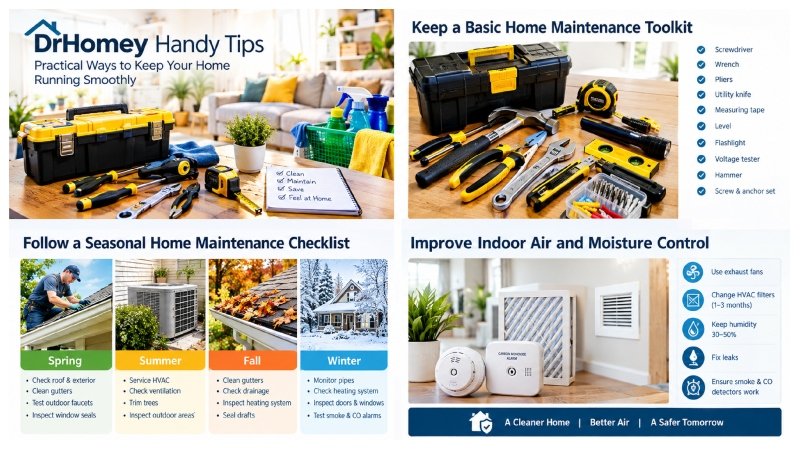
Regular seasonal inspections can help homeowners spot problems before they become major repairs.
| Season | Useful Maintenance Tasks |
|---|---|
| Spring | Inspect the roof and exterior for winter damage, clean gutters, check outdoor faucets, inspect window and door seals |
| Summer | Maintain air-conditioning equipment, check ventilation, trim branches near the house, inspect outdoor areas |
| Fall | Clean gutters, check drainage, inspect heating equipment, seal noticeable drafts, prepare outdoor fixtures |
| Winter | Monitor pipes for freezing conditions, check heating systems, inspect doors and windows for drafts, and test smoke and CO alarms |
The exact schedule depends on climate, property type, and local weather conditions. Homes in areas with heavy rain, extreme heat, or freezing temperatures may require additional checks.
Reduce Energy Waste Without Major Renovations
Energy efficiency does not always require replacing an entire heating or cooling system. Small improvements can make a difference over time.
LED bulbs are one straightforward option. The U.S. Department of Energy notes that LEDs use at least 75% less energy than incandescent lighting and can last substantially longer.
Air leaks around doors and windows can also affect comfort. Weatherstripping and appropriate caulking can help reduce unwanted drafts.
Smart thermostats are another option. ENERGY STAR states that certified smart thermostats use real-world field data to demonstrate energy savings. Its current guidance reports average savings of approximately 8% of heating and cooling bills, although actual savings vary with climate, equipment, occupancy, and user behavior.
Rather than assuming a particular temperature adjustment will work for every home, use a schedule based on when the home is occupied and follow the recommendations for your specific HVAC system.
Improve Indoor Air and Moisture Control
Indoor air quality is closely connected to ventilation, filtration, cleanliness, and moisture control. The EPA recommends three main approaches: controlling pollution sources, providing adequate ventilation, and using filtration or air cleaning where appropriate.
Simple habits include:
- Use kitchen and bathroom exhaust fans when cooking or showering.
- Vent exhaust fans outdoors where possible.
- Clean or replace HVAC filters according to the manufacturer’s instructions.
- Fix water leaks promptly.
- Keep indoor relative humidity around 30% to 50% when practical.
- Keep damp areas dry to reduce conditions that support mold growth.
The EPA specifically recommends maintaining indoor humidity between 30% and 50% and emphasizes moisture control as part of indoor air-quality management.
Houseplants can be enjoyable additions to a home, but they should not be presented as a substitute for proper ventilation, filtration, or moisture control.
Check Appliances and Hidden Maintenance Areas
Some of the most important maintenance tasks are easy to overlook because they are not visible during everyday use.
Check the lint filter in your clothes dryer before or after each use and inspect the dryer exhaust system periodically. The U.S. Consumer Product Safety Commission recommends keeping the lint filter clean and ensuring that the exhaust vent is not restricted. It also recommends cleaning lint from the vent pipe at least once a year.
Other useful checks include
- Inspect refrigerator door seals.
- Clean appliance filters where manufacturer instructions allow.
- Check washing-machine hoses for cracks or bulges.
- Look for water around dishwashers and washing machines.
- Keep appliance ventilation openings clear.
- Follow manufacturer schedules for servicing heating and cooling equipment.
These simple inspections can help identify wear before it causes a larger problem.
Make Home Safety a Regular Habit
Maintenance is not only about appearance and efficiency. Safety should be part of the routine.
The CPSC recommends installing smoke alarms on every level of the home, outside sleeping areas, and inside bedrooms. It also recommends testing alarms monthly and replacing batteries annually unless the device uses a sealed 10-year battery.
Carbon monoxide alarms are also important, particularly in homes with fuel-burning appliances or other potential sources of carbon monoxide. They should be installed according to manufacturer instructions and applicable local requirements.
Smoke alarms should also be replaced according to their manufacturer’s instructions; CPSC guidance commonly recommends replacing smoke alarms that are more than 10 years old.
Keep a suitable fire extinguisher accessible, maintain clear escape routes, and make sure stairways and walkways are free from unnecessary obstacles.
Focus on Small Improvements With Long-Term Benefits
Home improvement does not always mean remodeling an entire room. Small changes can improve functionality and appearance without a large budget.
Consider:
- Replacing worn cabinet or drawer hardware
- Touching up damaged paint
- Improving storage in a cluttered area
- Replacing old bulbs with LEDs
- Adding weatherstripping around drafty doors
- Improving lighting in work areas
- Repairing damaged caulking
- Organizing frequently used tools and supplies
The most useful improvement is often the one that solves a recurring problem. If a particular drawer is always disorganized, improve that drawer. If a room feels uncomfortable because of drafts, investigate the source instead of simply buying more heating or cooling equipment.
Putting DrHomey Handy Tips Into Practice
The value of DrHomey handy tips comes from consistency rather than trying to complete every maintenance task in one weekend. Start with a simple monthly checklist and add tasks according to the age, condition, and needs of your home.
Check for leaks, inspect important appliances, replace or clean filters when required, test safety alarms, control indoor moisture, and address small repairs before they become larger problems.
A practical home-maintenance routine can make a property easier to manage while supporting comfort, safety, cleanliness, and energy efficiency. By turning these tasks into regular habits, homeowners can stay ahead of common problems and keep their homes running smoothly throughout the year.
Please visit my site, Drhomeyinterior, for more details.