
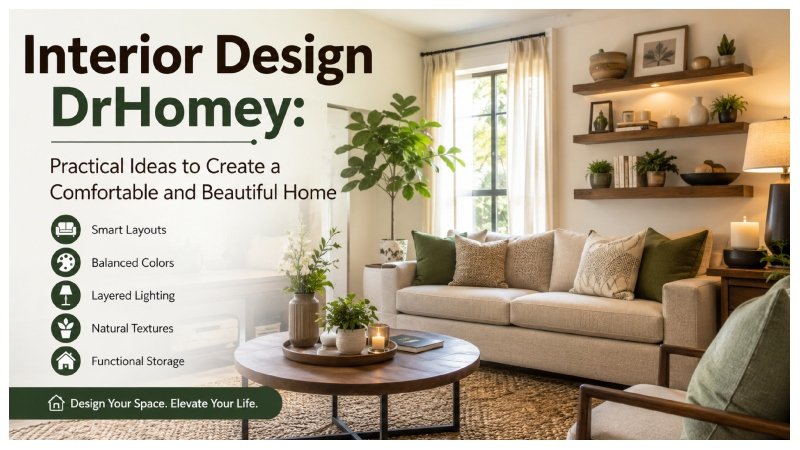
A beautiful home is not only about expensive furniture, modern decorations, or following the latest trends. A well-designed home should feel comfortable, organized, functional, and personal. Interior Design DrHomey focuses on creating spaces that look attractive while also supporting the way people live every day.
Whether you live in a large house, a small apartment, or a compact studio, the same basic principles can help you improve your space. Smart furniture choices, balanced colors, suitable lighting, natural textures, and effective storage can make a noticeable difference without requiring a huge budget.
The goal of Interior Design DrHomey is simple: create a home that feels welcoming and works well for your lifestyle.
What Is Interior Design DrHomey?
Interior Design DrHomey is a practical approach to home design that combines style, comfort, and functionality. Instead of creating spaces that only look good in photographs, this approach considers how a room is actually used.
Every room has a different purpose. A living room should encourage relaxation and conversation, while a bedroom should provide a peaceful environment for rest. A kitchen needs practical work areas and storage, and a bathroom should remain organized and easy to maintain.
Good interior design begins by understanding these needs and then selecting furniture, colors, lighting, and decorative elements that support them.
Start With Your Room Layout
Before purchasing furniture or decorations, consider the layout of the room. Think about how people move through the space and what activities normally take place there.
Begin with the largest furniture item, such as a sofa, bed, or dining table. Position it according to the room’s purpose and available space. Then add smaller furniture pieces around it.
Try to keep main walking paths clear. Around three feet of space is generally a useful target for major pathways, although the ideal distance depends on the room.
Measuring walls, doors, windows, and available floor space before shopping can also prevent expensive mistakes. Furniture that looks attractive in a showroom may feel oversized once it enters your home.
Choose a Balanced Color Palette
Color can dramatically affect how a room looks and feels. Light shades can make smaller rooms appear brighter and more open, while darker colors can create depth and a cozy atmosphere.
A simple approach is to choose three main colors. Use the primary shade across walls or large areas, a secondary color through furniture and textiles, and an accent color through cushions, artwork, rugs, or decorative objects.
Neutral colors such as white, beige, cream, gray, and soft earth tones can provide a flexible foundation. You can then introduce stronger colors through smaller items that are easier and less expensive to replace.
The important thing is to maintain balance rather than filling the room with too many competing shades.
Select Furniture for Comfort and Function
Furniture should look good, but comfort and practicality should come first. Choose pieces that match the size of your room and the needs of your household.
Multi-purpose furniture can be particularly useful in smaller homes. For example, a storage ottoman can provide additional seating while keeping blankets or other items out of sight. An extendable dining table can provide extra space when guests visit without taking up unnecessary room every day.
Avoid buying furniture simply because it is fashionable. A timeless and comfortable piece can provide greater value than an item that quickly becomes outdated.
Use Different Layers of Lighting
Lighting is one of the most important elements of Interior Design DrHomey. Even a beautifully decorated room can feel uncomfortable if it relies on a single harsh light source.
A well-designed room generally benefits from three lighting layers:
- Ambient lighting: Provides general illumination through ceiling fixtures or larger lights.
- Task lighting: Supports specific activities such as reading, cooking, working, or applying makeup.
- Accent lighting: Highlights artwork, plants, shelves, architectural features, or other decorative details.
Natural light is equally valuable. Keep windows as clear as possible and avoid placing large furniture directly in front of them when it blocks sunlight.
Warm bulbs, table lamps, floor lamps, and dimmer switches can also help create a softer atmosphere during the evening.
Add Texture and Natural Elements
A room can feel flat when it relies on only one material or texture. Mixing different surfaces creates visual depth and makes a space feel warmer.
Consider combining wooden furniture with soft rugs, woven baskets, curtains, cushions, and comfortable throws. Materials such as wood, stone, cotton, and other natural textures can create a relaxed and timeless appearance.
Plants are another simple way to add personality. A few well-placed plants can introduce natural color and make a room feel more lively.
Personal objects are equally important. Family photographs, books, artwork, handmade pieces, and travel souvenirs can make your home feel unique rather than copied from a showroom.
Room-by-Room Interior Design Ideas
Living Room
Arrange sofas and chairs so people can comfortably communicate with one another. A rug can help define the seating area, while cushions and throws can add softness.
Choose a clear focal point, such as artwork, a fireplace, television, or feature wall, and arrange the furniture around it.
Bedroom
A bedroom should feel calm and uncluttered. Choose soft or neutral colors, comfortable bedding, and gentle evening lighting.
Keep bedside tables simple and organized. Blackout curtains can also be useful when you need a darker sleeping environment.
Kitchen
Functionality is especially important in the kitchen. Keep frequently used items within easy reach and avoid covering countertops with unnecessary objects.
Drawer organizers, shelves, cabinets, and practical storage solutions can make cooking and cleaning easier.
Bathroom
Use wall-mounted storage, hooks, and shelves where possible to keep the floor clear. Soft towels, a suitable bath mat, plants, or simple artwork can add personality without overwhelming the space.
Make Small Spaces Feel Larger
Small homes can still look stylish and comfortable. The key is to use available space carefully.
Mirrors can reflect light and create a greater sense of openness. Furniture with visible legs can make more of the floor visible, while wall-mounted shelves can provide storage without using valuable floor space.
Choose furniture that performs multiple functions and avoid filling every corner with decorative objects. Keeping surfaces and pathways clear can make a small room feel significantly more spacious.
Budget-Friendly Ways to Refresh Your Home
You do not need to replace everything to create a new look. Small changes can have a major visual impact.
Consider repainting one wall, changing cushion covers, rearranging furniture, adding a new rug, improving lighting, or introducing a few plants. Shopping at secondhand stores and looking for quality pieces during sales can also reduce costs.
Before making expensive purchases, create a simple budget and prioritize the changes that will have the greatest effect.
Regular organization is just as important as decoration. Spending a few minutes each day clearing clutter can help maintain the look and functionality of your home.
Common Interior Design Mistakes to Avoid
Some common mistakes can reduce both the appearance and usefulness of a room:
- Buying furniture without measuring the space
- Using too many colors or patterns
- Blocking natural light
- Ignoring storage requirements
- Choosing appearance over comfort
- Depending on only one light source
- Filling every available surface with decorations
A successful design does not require perfection. It requires balance and thoughtful decisions.
Conclusion
Interior Design DrHomey is about creating a home that looks beautiful while making everyday life easier and more comfortable. Good design starts with understanding how you use each room and then making practical choices about layout, furniture, colors, lighting, storage, and decoration.
You do not need a professional designer or a large budget to begin. Start with one room and make a few meaningful changes. Rearrange your furniture, remove unnecessary clutter, improve the lighting, or introduce a new color or natural element.
Over time, these small improvements can transform an ordinary house into a comfortable, functional, and personal home.